

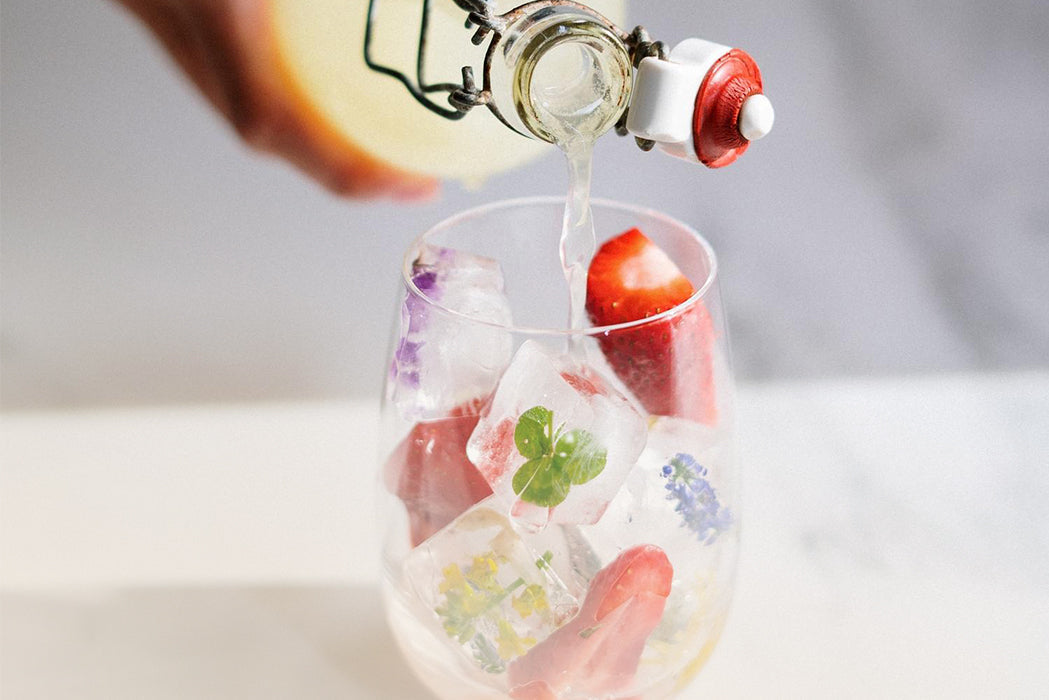
If you've been diligently reading our blog, you're already a pro at making fermented tea beverages, and it's time for the sparkling refinement: the second fermentation. An unexpected variety, combinations entirely to your taste, and complementary ingredients for your delicious kombucha await you here.
What happens during the second fermentation?
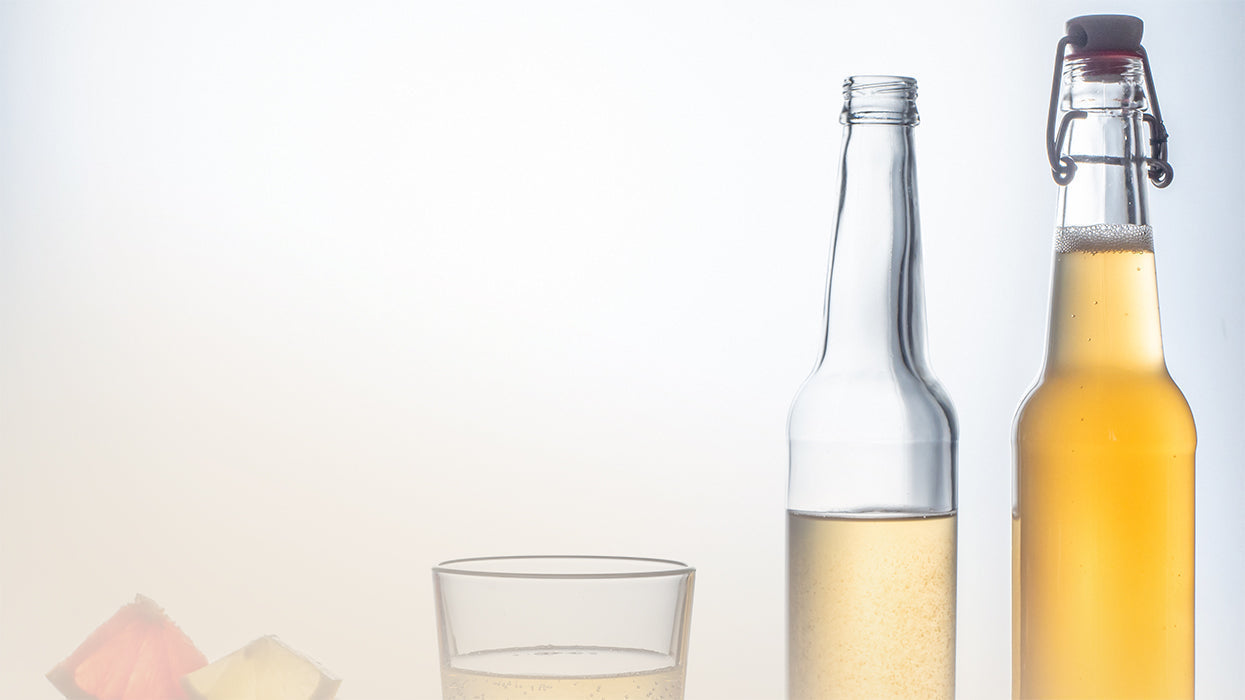
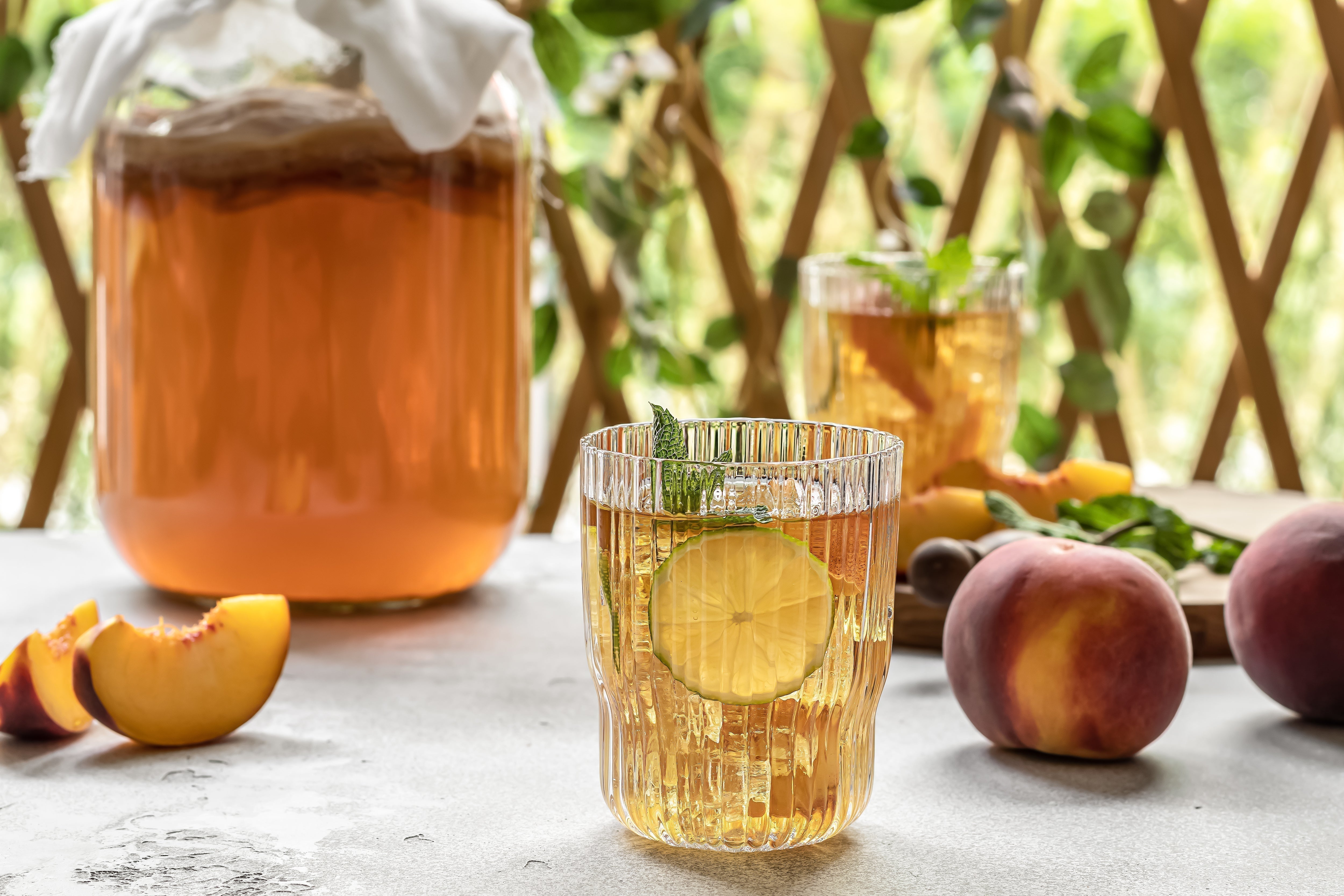
After the first fermentation, kombucha can be bottled in pressure-safe, sealed bottles for a second fermentation phase. Fruits, juices, herbs, or spices can be added to further develop the taste and aroma.
The yeasts present in the drink can further metabolize residual sugar and sugar from additionally used ingredients. This can lead to the formation of carbon dioxide. Since this cannot simply escape from the closed bottle, the carbonation increases.
How strong this effect is depends, among other things, on the culture used, the amount of sugar, the additional ingredients, the temperature, and the fermentation time.
The second fermentation primarily serves to refine the taste and carbonate the drink. It does not automatically make kombucha "healthier" and does not allow for general statements about additional health effects.
Because pressure can build up in the bottle during the second fermentation, only pressure-safe bottles should be used, and they should be opened carefully.

What do I need for the second fermentation?
For the second fermentation, you need fully fermented kombucha and pressure-safe, tightly sealable bottles. Depending on how many flavors you want to try, you can use several smaller bottles.
Leave some space up to the lid when bottling, then add the desired ingredients. Especially fruits, juices, and other sugary ingredients can enhance the further formation of carbonic acid.
Depending on the recipe, the kombucha can then continue to ferment for a short time at room temperature. Check the bottles regularly and always open them carefully, as pressure can build up.
When the taste and carbonation are right for you, place the bottles in the refrigerator. Cooling significantly slows down further fermentation, but does not necessarily stop it completely.
Tip: Only use sturdy bottles that are explicitly suitable for carbonated beverages or fermentation.
Fruits, herbs, and spices for more flavor
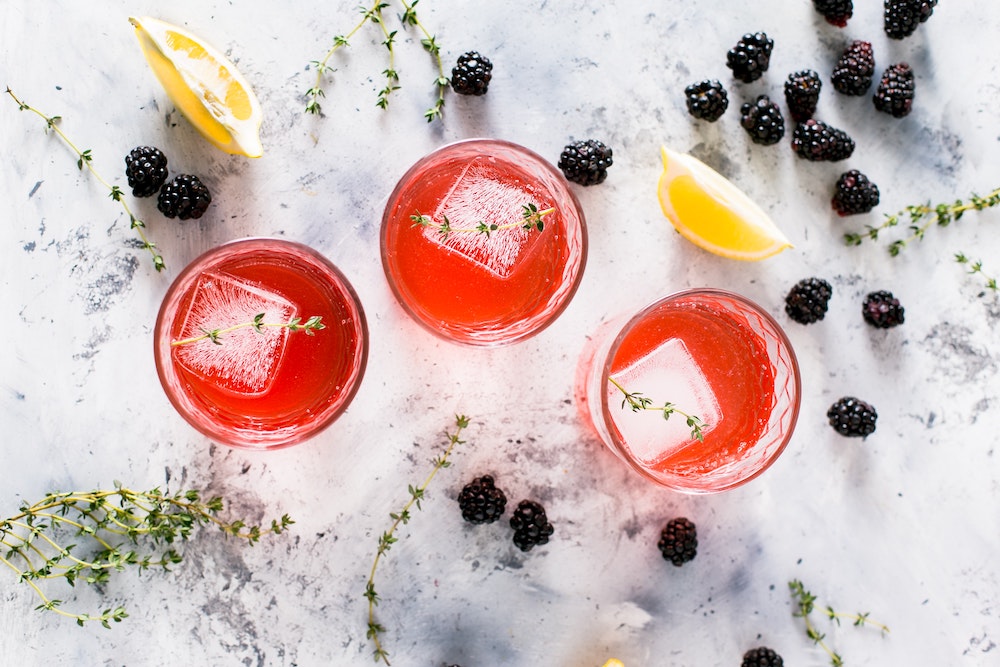
With fruits, juices, herbs, and spices, you can flavor your kombucha in many different ways.
Possible ingredients include:
- fresh fruits and berries such as strawberry, orange, apple, watermelon, plum, pomegranate, or lemon
- dried fruits such as dates, figs, cranberries, mango, or raisins
- herbs such as basil, mint, rosemary, thyme, or lemon verbena
- spices such as cinnamon, vanilla, cardamom, ginger, or star anise
- edible flowers such as lavender, rose, elderflower, or hibiscus
- juices such as orange, apple, pomegranate, grapefruit, or ginger juice
- ingredients such as ginger, turmeric, beetroot, or cucumber
Often, less is more. If you limit yourself to one to three ingredients, the individual flavors remain more discernible.
Also, note: The more fermentable sugar the additional ingredients contain, the stronger the further fermentation and thus also the carbonic acid formation can be.
Our Kombucha Varieties
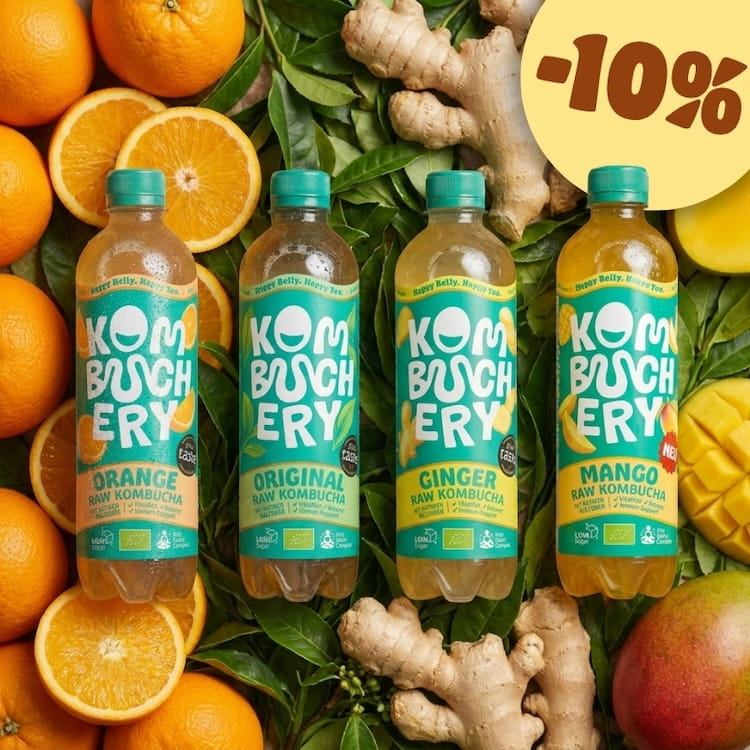
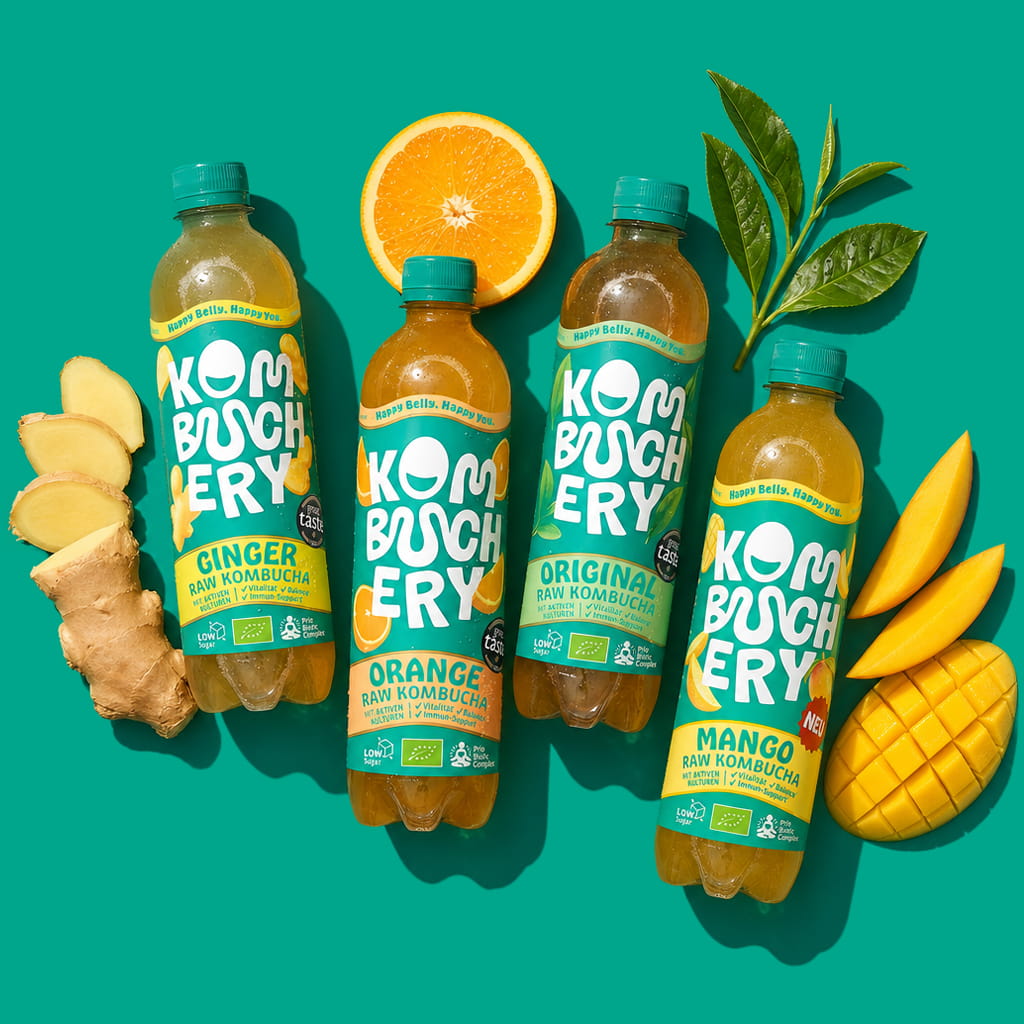
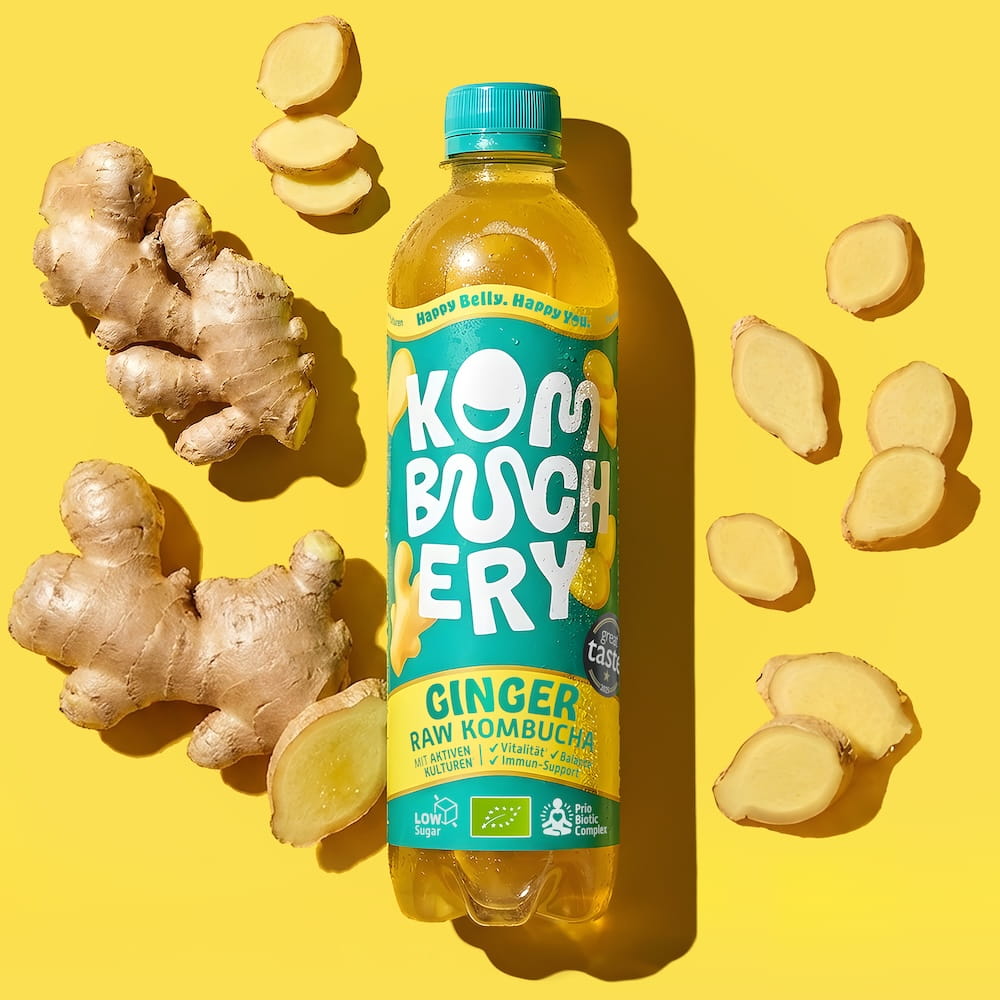
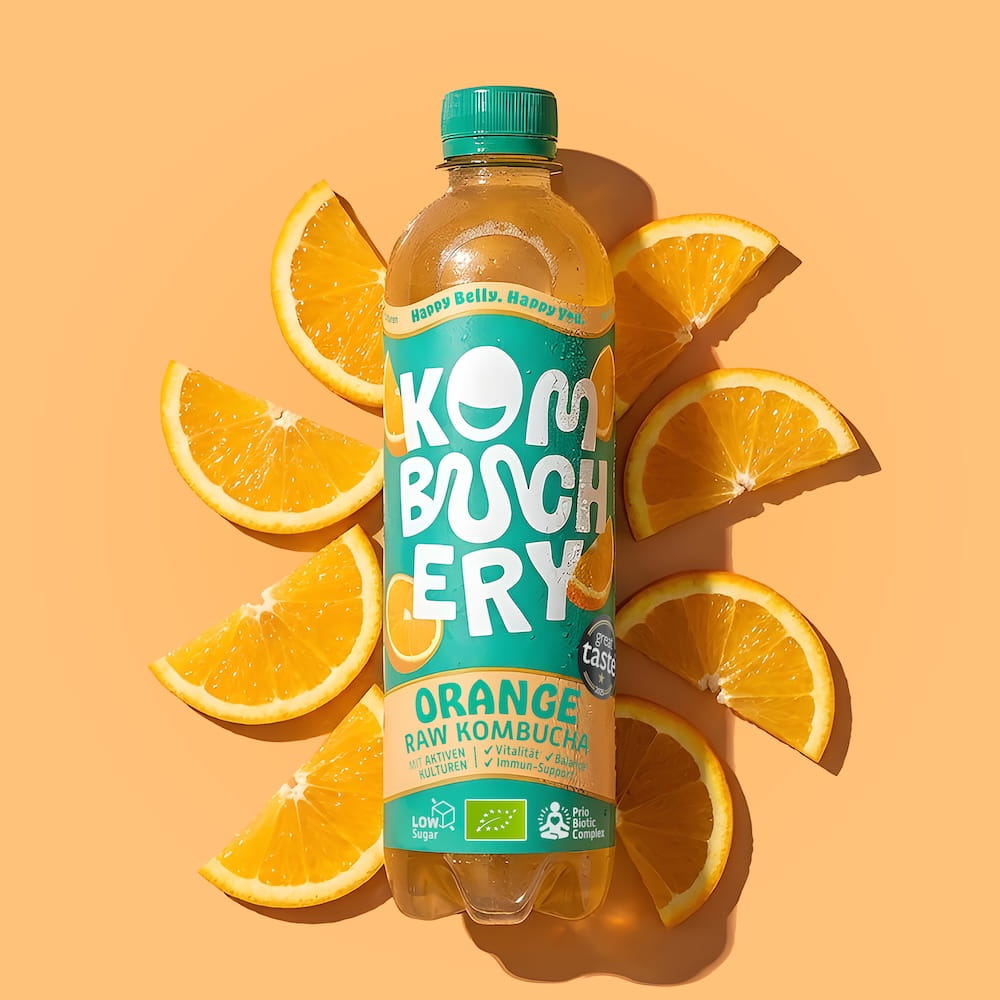
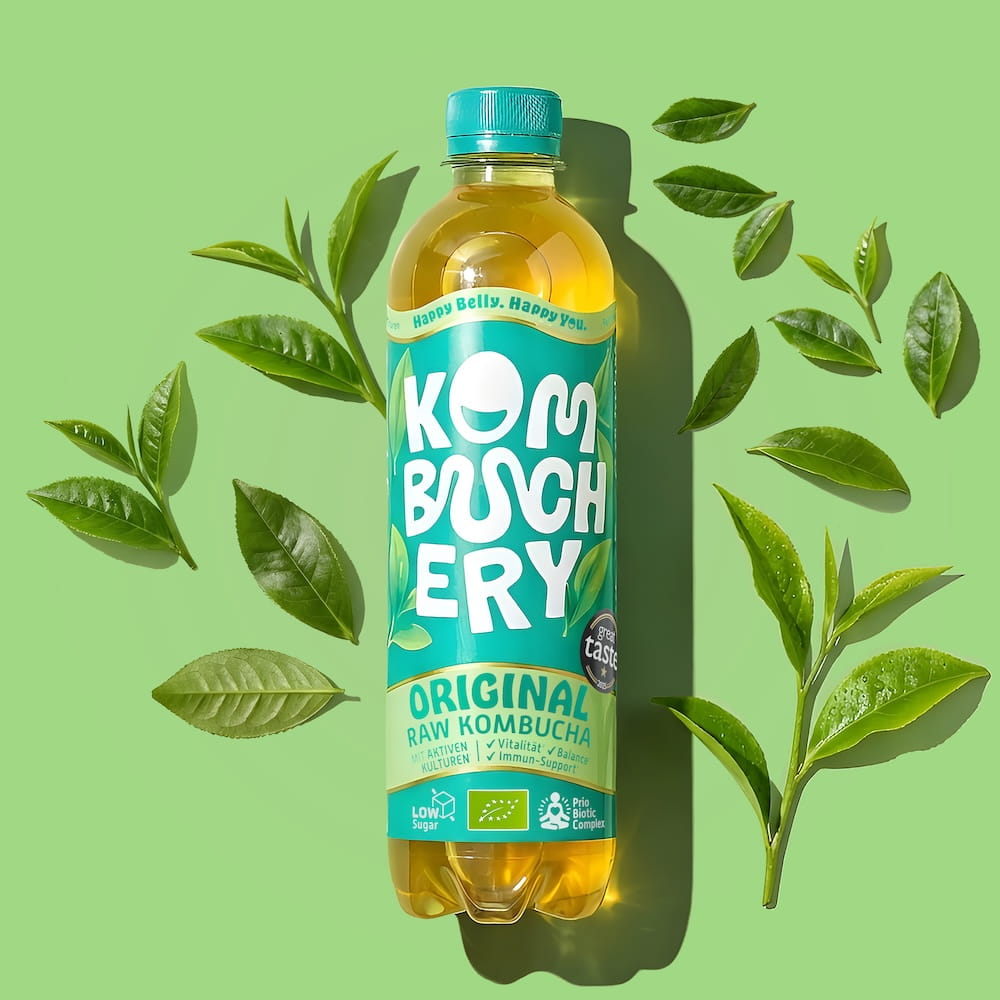
At Kombuchery, you'll currently find the varieties Original, Ginger, Mango, and Orange. The base for each is fermented organic green tea, supplemented by the respective variety-specific ingredients.
Since recipes and assortments can evolve, you will always find the current ingredient list and nutritional declaration directly on the corresponding product page.
Kombucha as a personal routine
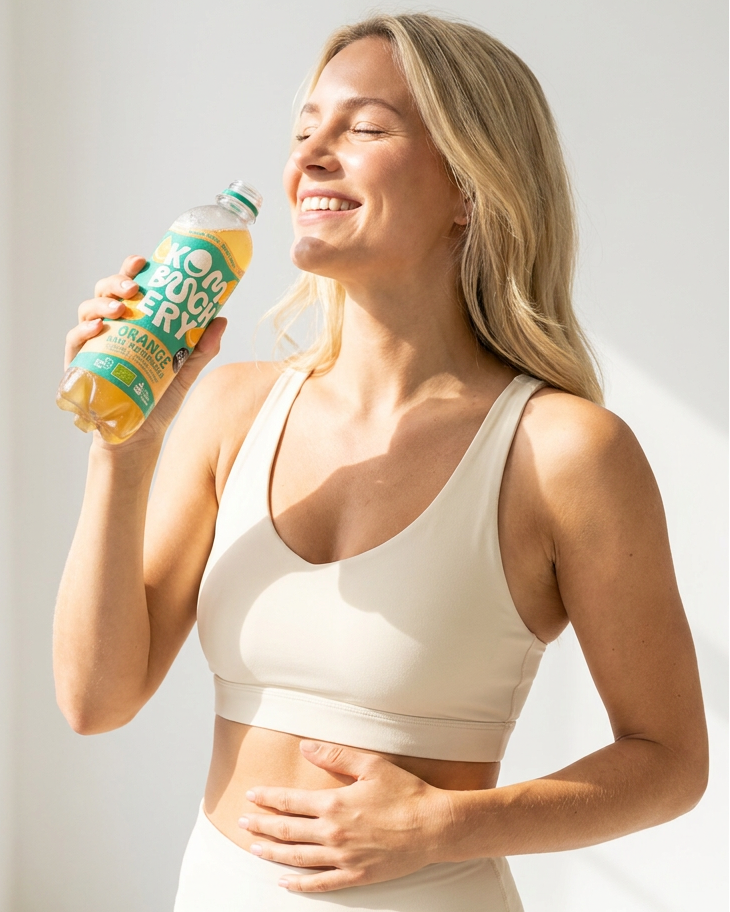
Some people drink kombucha regularly, others only occasionally. A specific drinking period, such as 30 days, is not necessary.
If you are new to kombucha, you can try different varieties and situations to find out when the fermented tea drink best fits into your daily routine.
Those who drink kombucha regularly for 30 days primarily establish a consistent beverage routine. Our community, for example, reports replacing classic soft drinks more often with kombucha or discovering new favorite varieties for different situations in everyday life. However, any individual health changes perceived cannot be universally attributed to kombucha.
Fruits, juices, and spices for your own second fermentation
You can also further develop the taste of your kombucha at home using different ingredients.
Ginger, for example, brings an intense, spicy pungency. Berries provide fruity-sour notes, while citrus fruits can add freshness and passion fruit a tropical aroma.
Which ingredients you use is primarily a matter of desired taste. At the same time, especially sugary fruits and juices can influence further fermentation and carbonation.
Recipes for the second fermentation
Please note for all preparations: If many bubbles are visible in the bottle, pressure should be carefully released. Preferably once a day.

Ginger-Lemon Kombucha
What you need:
- 4 glass bottles à 200 ml
- 8 slices peeled ginger
- 3 bottles KOMBUCHERY Original
- 30 ml freshly squeezed lemon juice
How to make it:
- Divide the kombucha among 4 bottles.
- Distribute the peeled and washed ginger slices into the bottles.
- Fill lemon juice into the bottles in the same proportion.
- Seal the bottles.
-
Allow the kombucha to continue fermenting briefly at room temperature with regular checks. Depending on the culture, ingredients, sugar content, and temperature, 1 to 3 days may be sufficient. Carefully check pressure and carbonation and then place the bottle in the refrigerator. Cooling significantly slows down further fermentation, but does not necessarily stop it completely.
Cranberry-Ginger Kombucha
What you need:
- 500 ml finished kombucha
- 2 tablespoons cranberry juice
- 1 teaspoon grated ginger (if you don't like ginger much, you can also use freshly squeezed orange juice)
How to make it:
- Pour 500 ml fermented kombucha into a suitably large pressure-safe bottle.
- Add the ginger and cranberry juice. If you want a stronger cranberry flavor, you can double the amount of cranberry juice.
- Close and secure the lid of the bottle.
-
Allow the drink to continue fermenting at room temperature only until the desired level of carbonation is reached, checking the bottle regularly. Depending on the culture, ingredients, sugar content, and temperature, this can be significantly before five days. Then store in the refrigerator.
Cranberry juice adds a tart, fruity-sour note to the kombucha. Together with ginger, a strong aroma of fruitiness, acidity, and spicy pungency is created.

Kombucha with Flowers
What you need:
- 800 ml finished kombucha
- 1 small elderflower umbel
- 10 to 15 chamomile blossoms
- 3 lavender blossoms
- 3 rosebuds (dried, they have more aroma)
How to make it:
- Pour the kombucha into a swing-top bottle.
- Shake out all the blossoms to free them from pollen and small insects.
- Pluck the small elderflower umbels.
- Separate the chamomile and lavender blossoms from the stem directly behind the flower heads.
- Add all ingredients to the bottle.
- Seal the bottle and let it stand at room temperature for 1 to 3 days. Taste it occasionally.
- When the taste and carbonation are right, filter out the ingredients and store the kombucha in the refrigerator.
Elderflower, chamomile, lavender, and rose blossoms bring floral, sometimes slightly tart aromas to the second fermentation.
For beverages, only use edible and, if possible, untreated flowers. If you collect plants yourself, you should also be sure that you can clearly identify the respective plant.

Minty Strawberry Kombucha
What you need:
- 800 ml finished kombucha
- 3 tbsp strawberries cut into pieces
- 6 to 10 peppermint leaves (depending on desired intensity)
How to make it:
- Add the strawberry pieces and mint leaves to the fermentation bottle.
- Seal the bottle and let the mixture ferment at room temperature for 1 to 3 days.
- After one day, you can already taste the drink. If the taste and carbonation are to your liking, enjoy the drink immediately or store it in the refrigerator.
Strawberries bring natural sweetness and a fruity aroma to kombucha. Mint adds a fresh, slightly cooling flavor note. Together, they create a particularly summery variation for the second fermentation.
You can find more delicious recipes and book recommendations here on our blog.
FAQ
How long does kombucha last after the second fermentation?
There is no general shelf life for home-fermented kombucha. It depends on hygiene, recipe, fermentation level, residual sugar, ingredients, and storage, among other things.
Cooling significantly slows down further fermentation, but does not necessarily stop it completely. Therefore, homemade kombucha should be processed cleanly and stored in the refrigerator.
In case of visible mold, unusual smell, or other abnormal changes, home-fermented kombucha should no longer be consumed.
What ingredients can kombucha contain?
The composition of kombucha depends on the tea, culture, sugar, fermentation duration, and production method.
Typically, various microorganisms, organic acids, components of the tea used, and other fermentation products can be present.
Not every kombucha automatically contains the same vitamins, minerals, microorganisms, or other substances in nutritionally relevant amounts.
Does kombucha contain alcohol?
Alcohol can be produced during the fermentation of kombucha. The alcohol content depends, among other things, on the recipe, culture, fermentation duration, temperature, and storage.
With homemade kombucha, the alcohol content can fluctuate more than with commercially produced products.
For bottled products, the current product labeling is decisive. Pregnant women, nursing mothers, and parents should seek individual medical advice if they have questions about consumption or the alcohol and caffeine content of a specific product.




Share:
3 comments
SUPER TOLLE Einführung in das Thema. Kurz und trotzdem ausführlich genug.
DANKE … und jetzt gehts los mit der Zweitfermentation ;-D
Die beste Beschreibung überhaupt. Sehr ausführlich und interessant. Danke
Hallo und danke für die ausführlichen Infos.
in meiner Zweitfermentation (pur) entwickelt sich in den Flaschen immer ein Schleimpfropf. Warum und ist der schädlich? Ich bin noch nicht sehr mit dem Brauen des Kombuchas vertraut und hoffe auf eine Antwort.
LG Maria