
Login

– Before you continue reading –

Not only do we know almost everything about kombucha, we also brew it!

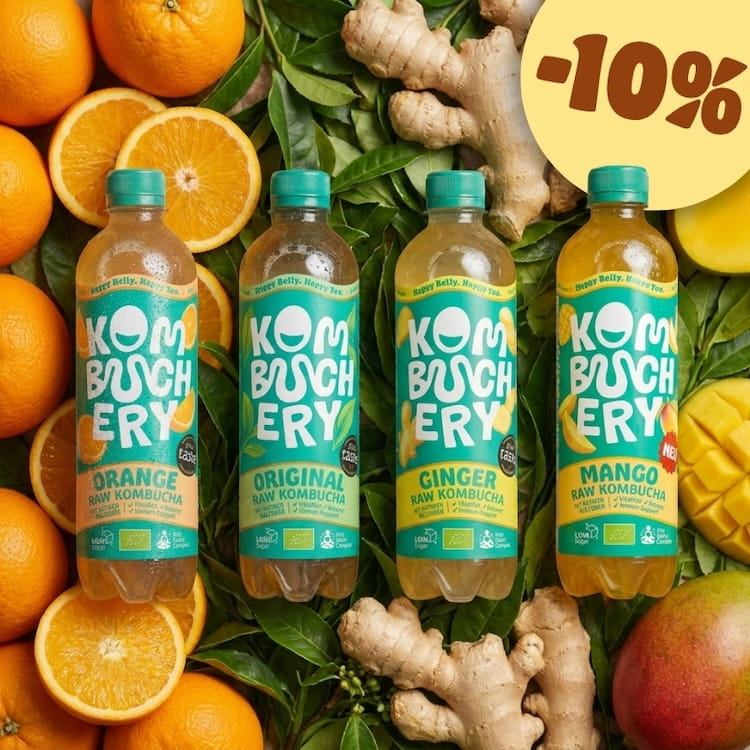
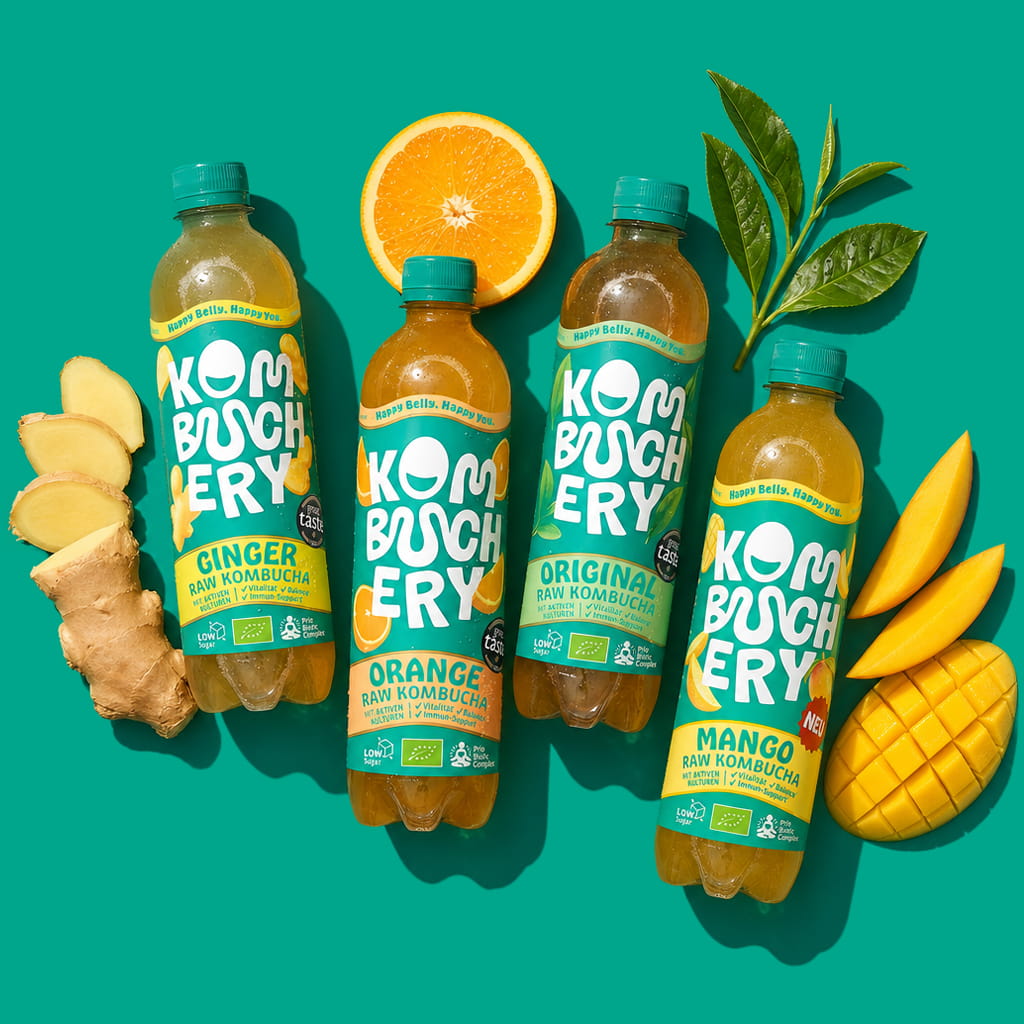
Our 8-times award-winning Raw Kombucha combines millions of active cultures with smart organic ingredients and vitamin C. Thirsty yet? Visit our shop and see for yourself!

Try Kombuchery
Editorial Note: This article deals with general scientific findings on kombucha and not with Kombuchery products. Scientific findings and study results are not automatically transferable to individual foods or products. The article does not replace medical or nutritional advice and is not to be understood as a health-related statement about specific foods or products.

The content is based on scientific literature, publicly available sources, and the author's assessment, and does not claim to be exhaustive. New studies may confirm, supplement, restrict, or refute existing findings. Scientific publications should therefore always be considered in the overall context of the available evidence.

Studies generally refer to the specific conditions, ingredients, microorganisms, dosages, manufacturing processes, and groups of people investigated. The presented results cannot therefore be readily transferred to other foods, recipes, manufacturing processes, or products.

No statements about the effects, properties, or health benefits of specific foods or products can be derived from the information presented.

Health-related claims for foods in the European Union are subject to the applicable legal requirements. The presentation of scientific research is therefore not to be equated with a permissible health-related claim about a food or product.

If you would like to delve deeper into a topic, we recommend consulting the scientific sources linked in the article and other independent specialist literature to gain as comprehensive an understanding as possible of the current state of research.

What kind of tea you can use for fermentation

A lovingly crafted kombucha and high-quality tea are inseparable. We'll give you a few simple rules to avoid making the wrong tea choice. Afterwards, you'll find an interesting interview about tea with the tea experts from Sensaterra.

Why do you need tea for kombucha?

The kombucha scoby consists of various yeasts and bacteria, and various small microorganisms. It needs nutrients such as caffeine, nitrogen, and theanine to grow and thrive. These are found in the tea varieties of Camellia Sinensis described above. The tea provides the SCOBY with various plant-based components like polyphenols and, together with sugar and water, forms the basis of fermentation.

The right tea choice for Kombucha:

  1. As a kombucha beginner, use black tea or a mixture of green and black tea for fermentation.

  2. Do not use tea with a high content of essential oils or artificial flavors (e.g., sage or lemon balm tea).

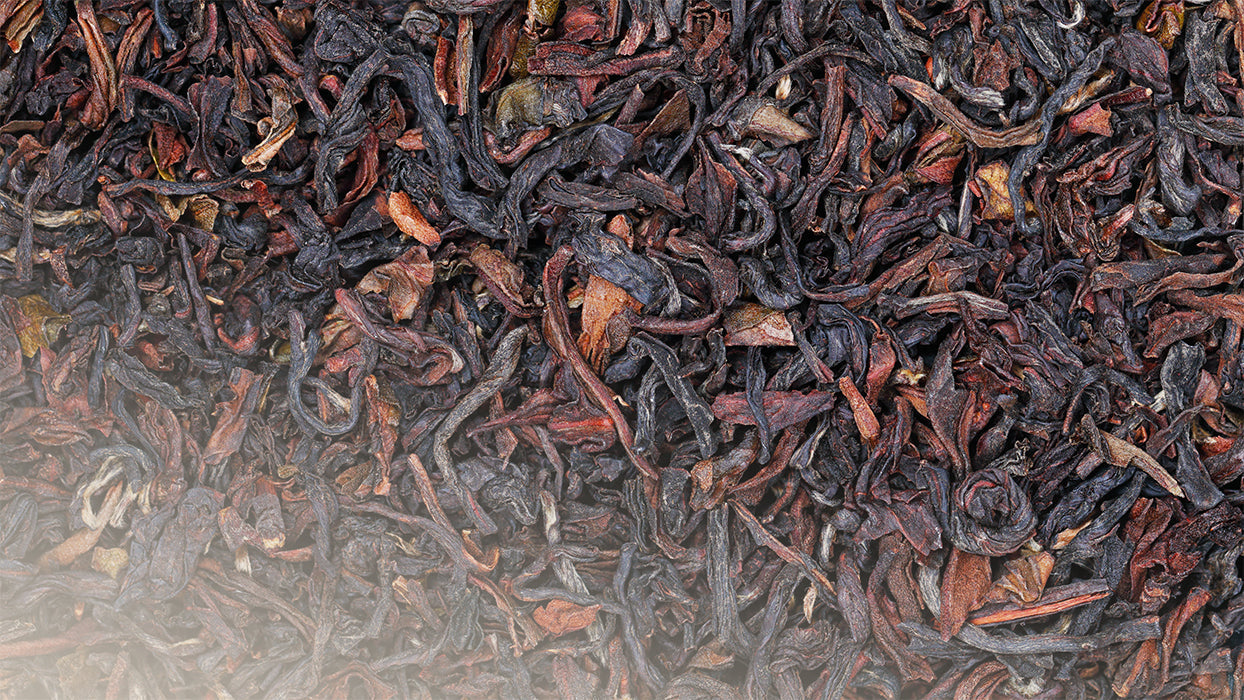
  3. Preferably use loose leaf tea and not tea from bags.

  4. Do not use fruit tea or other exotic, fruity teas on their own – only mix them in!

Draufsicht Sechs Sorten Tee in Einmachglaesern

Which water to use for brewing tea for kombucha fermentation?

The composition of the water used can also affect taste and fermentation. Drinking water can generally be suitable for kombucha fermentation. Whether additional filtering is useful depends on the tap water and its composition. Therefore, always use filtered water.

Interview with the tea experts from Sensaterra – The magazine for all current topics on tea and coffee

What makes a really good tea?

The beautiful thing is that everyone can perceive something different as "good". That's why it's difficult to make an accurate statement here. I would first recommend not to consume tea with artificial flavorings or added sugars. The ingenious thing about tea is that you can enjoy the fermented substances and aromas from the plant in the most diverse combinations. If you let yourself be open to what nature has to offer, you will be surprised. What can definitely make a huge difference in terms of taste is the preparation method of the respective tea. It is very important to pay attention to the water temperature and brewing time. The hotter the water and the longer the brewing time, the more likely it is to extract unwanted bitter substances from the tea leaves, and this then distorts the true and delicious aromas that would otherwise be tasted.

What is the difference between black and green tea?

The difference between black and green tea lies in the post-harvest processing. In fact, it is very similar for both teas, except that black tea leaves then ferment, and green tea leaves do not. That's why black tea is dark. Generally speaking, both green and black tea can be obtained from one and the same bush. But as with everything, there is so much creative leeway in the processing that it is possible to obtain a variety of special flavors.

What are the health benefits of regular tea consumption?

This depends heavily on which tea is consumed. But one thing is for sure: tea consists exclusively of water, and our body needs a lot of it. (Everything in moderation, overdoing it is never good). Certain fruit teas, for example, also contain vitamins that can be good for us. Many herbs in tea stimulate our metabolism or relax us.

Is the theine in tea more tolerable than the caffeine in coffee?

Theine is very similar to caffeine. However, it is not as "aggressive". Caffeine has the property of making a person fully awake again for a short moment. Theine, on the other hand, wakes the body up slowly. But it also keeps you awake for much longer. My professor at university always recommended that I drink tea rather than coffee during exam periods, because the long-term effect of staying awake with theine is better than with caffeine.

You have several articles on Kombucha on your blog. What makes a good Kombucha for you?

Since we are not specialists in Kombucha, the credibility of our partner is a big factor for us. We are firmly convinced that in conversation with our partners, it quickly becomes clear whether we are dealing with industrial products or high-quality products that have not been pasteurized.

Who is behind Sensaterra and what is your mission?

Sensaterra is backed by a diverse, small, young team. Our CEOs Maxence Béguin and Camille Rodriguez are both French. However, the entire team also consists of Germans and Italians, as we want to launch our e-commerce simultaneously in these three countries. Our mission is to bring an e-commerce platform to the market that exclusively offers high-quality hot beverages. This means: We want to direct attention back to small local businesses, retailers, and roasters and at the same time give them a modern voice through our webpage. We do not want to support industrial products and want to remain authentic in conveying information to customers. In this way, more people will surely soon appreciate how much work can go into a hot cup of tea, chocolate, coffee, etc.

Where do you source your tea? Do you pay attention to fair trade?

We do not have our own production and therefore no own products. All the teas we offer on our platform belong to small suppliers from France, Italy or Germany. Everyone has their personal specialties and natural production methods. It is also important to us that our partners share the same values as we do. We attach great importance to transparency, fair trade and sustainability.

Logo Sensaterra

Thanks to Eleana from Sensaterra for the interview!

More exciting articles by Eleana on topics related to tea and coffee can be found here.
2 comments

    • Kathrin Hegedüsch
    • October 24, 2025 at 2:09 pm

    Ich nehme schon länger Hibiskustee.als Grundlage und hat immer gut funktioniert. ( auch wegen der schönen Farbe und dem leicht fruchtigen Aroma) . Ist das denn so ok oder sind die Wirkstoffe dann reduziert? Lg Ksthrin

    • Jacqueline
    • October 15, 2024 at 10:42 am

    Hallo, ik heb al een aantal keren een kombucha gemaakt van zwarte thee bio, normaal kan ik nooit zwarte thee drinken want van de theïne krijg ik hoofdpijn. Ik had gehoopt dat door het fermenteren ik de kombucha wel kan verdragen maar het blijkt niet zo te zijn. Is er ook theïne vrije waarmee ik kombucha kan maken?

Leave a comment

Please note, comments need to be approved before they are published.

This site is protected by hCaptcha and the hCaptcha Privacy Policy and Terms of Service apply.

Recommended articles for you

More of my articles, from A, like alcohol-free kombucha cocktails, to Z, like lemon-ginger kombucha, can be found on our Kombuchery blog. Let's learn more about kombucha together!

View all

Mate Tee Trinkhalm Mateteegefaess

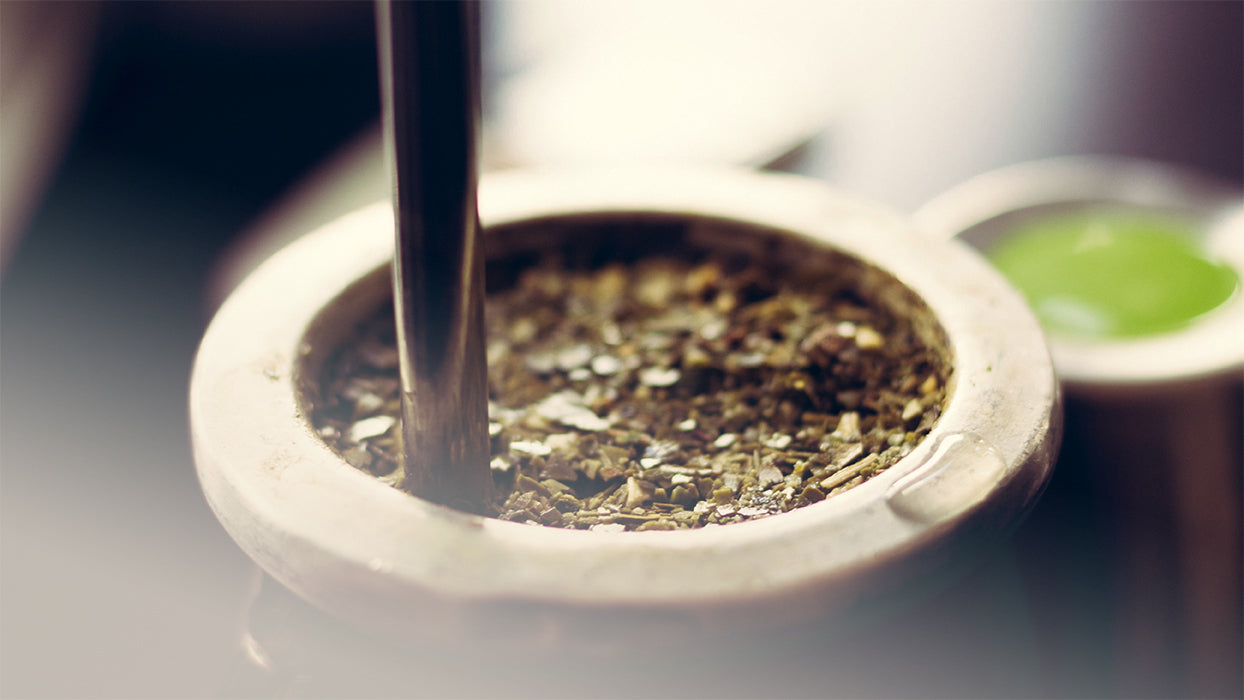
Mate Kombucha: What you should know about mate tea, caffeine, and yerba mate

Mate Tea Meets Kombucha Mate and kombucha can be excitingly combined in terms of taste: the characteristic tart, slightly smoky taste of mate meets the typical sweet and sour note of fermented kombucha. Mate tea has a long tradition, especially...

Read moreabout Mate Kombucha: What you should know about mate tea, caffeine, and yerba mate

Schwangere Frau im Anschnitt grosser Bauch Wiese Abendsonne

Is kombucha suitable for pregnant women and children? All about the alcohol content

Who should drink Kombucha? Kombucha is a fermented tea drink. Due to fermentation, small amounts of alcohol can be produced. In addition, depending on the tea used, kombucha can contain caffeine. But how exactly does alcohol form in kombucha? How...

Read moreabout Is kombucha suitable for pregnant women and children? All about the alcohol content

Warum kann Kombucha Alkohol enthalten? Alle Fragen zum Alkoholgehalt im Überblick

Why Can Kombucha Contain Alcohol? All Your Questions About Alcohol Content Answered

How is alcohol formed in kombucha? Is there kombucha without alcohol? Can pregnant women drink kombucha? Can I make alcohol-free kombucha? All your questions about kombucha and alcohol answered here!

Read moreabout Why Can Kombucha Contain Alcohol? All Your Questions About Alcohol Content Answered

10 Fakten zu Kombucha kaufen oder selber brauen Inhaltsstoffe

Fermented Tea Drink – 10 Interesting Kombucha Facts

What else you should know about Kombucha 1. Kombucha shelf life How long kombucha lasts depends on its production, bottling, and storage. Especially with homemade kombucha, a general shelf life of several months cannot be guaranteed. Even after bottling, the...

Read moreabout Fermented Tea Drink – 10 Interesting Kombucha Facts

Kombucha, Wasserkefir & funktionale Limonaden im Vergleich

Kombucha, Water Kefir & Functional Lemonades in Comparison

In recent years, the beverage market has changed significantly. In addition to classic soft drinks, an increasing number of fermented beverages and so-called functional sodas are now available in supermarkets. Kombucha, water kefir, and modern sodas with added fiber or...

Read moreabout Kombucha, Water Kefir & Functional Lemonades in Comparison

Kombucha Guide Berlin: 10 Cafés & Restaurants in 5 Bezirken

Kombucha Guide Berlin: 10 Cafés & Restaurants in 5 Districts

Urban Wellness in Berlin: 5 Neighborhoods Where You'll Find Really Good Kombucha Berlin is one of Europe's most exciting cities when it comes to modern food and drink culture. Kombucha is no longer a niche product here, but part of...

Read moreabout Kombucha Guide Berlin: 10 Cafés & Restaurants in 5 Districts

Kombucha und seine Wirkung: Wissenschaftliche Studien zu Inhaltsstoffen, Fermentation und Gesundheit

Kombucha and Its Effects: Scientific Studies on Ingredients, Fermentation, and Health

Kombucha is one of the most intensively studied fermented beverages in recent years. Modern microbiological, nutritional, and clinical studies show that the beverage has an exceptionally complex biochemical composition. During fermentation, numerous bioactive compounds are formed, including organic acids, polyphenols,...

Read moreabout Kombucha and Its Effects: Scientific Studies on Ingredients, Fermentation, and Health

World Kombucha Day am 21. Februar: Geschichte, Fakten & Tipps zum Feiern

World Kombucha Day on February 21: History, Facts & Tips for Celebrating

Celebrate the effervescent history of kombucha Every year on February 21, kombucha fans worldwide celebrate World Kombucha Day. But why exactly does this day exist? It's simple: it's a tribute to a drink that has delighted, inspired, and refreshed people...

Read moreabout World Kombucha Day on February 21: History, Facts & Tips for Celebrating

Nahrungsergänzungsmittel: Einsatz, Inhaltsstoffe & Risiken

Dietary Supplements: Use, Ingredients & Risks

Dietary Supplements: When They Can Be Useful and What to Consider In everyday life, it is not always possible to create a varied meal. Dietary supplements can specifically supplement the diet with individual nutrients, especially when an increased need or...

Read moreabout Dietary Supplements: Use, Ingredients & Risks

*Vitamin C contributes to the normal function of the immune system, normal energy metabolism, and the protection of cells from oxidative stress.
  • Vitamin C contributes to the normal function of the immune system.
  • Vitamin C contributes to normal psychological function.
  • Vitamin C contributes to normal energy-yielding metabolism.
  • Vitamin C contributes to the reduction of tiredness and fatigue.
  • Vitamin C contributes to the normal functioning of the nervous system.
  • Vitamin C contributes to the protection of cells from oxidative stress.
  • Vitamin C contributes to the regeneration of the reduced form of vitamin E.
  • Vitamin C contributes to normal collagen formation for the normal function of the skin.
  • Vitamin C contributes to normal collagen formation for the normal function of blood vessels.
  • Vitamin C contributes to normal collagen formation for the normal function of bones, cartilage, teeth and gums.
  • Vitamin C increases iron absorption.