


Prebiotics are often overshadowed by their more well-known "relatives," probiotics. While probiotics are living microorganisms that we ingest through food or supplements, prebiotics serve as food for the beneficial bacteria in the gut. They are, so to speak, the fuel for a balanced and efficient microbiome. But why exactly does the body need these special dietary fibers?
In this blog post, we will explain in detail why prebiotics are so important, how they work in the body, and what influence they have on digestion, well-being, and the immune system.
What exactly are prebiotics?
Prebiotics are indigestible dietary fibers — mostly special carbohydrates — that pass through the small intestine unchanged and are only fermented by gut bacteria in the large intestine. The most well-known prebiotic substances include:
-
Inulin
-
Oligofructose (FOS)
-
Galactooligosaccharides (GOS)
-
Resistant starch
-
Certain beta-glucans
Important: Prebiotics selectively promote the growth of beneficial bacteria, e.g., Lactobacillus and Bifidobacterium. This specifically shapes a healthy microbial environment.
Why our body needs prebiotics
1. Prebiotics promote a healthy gut flora
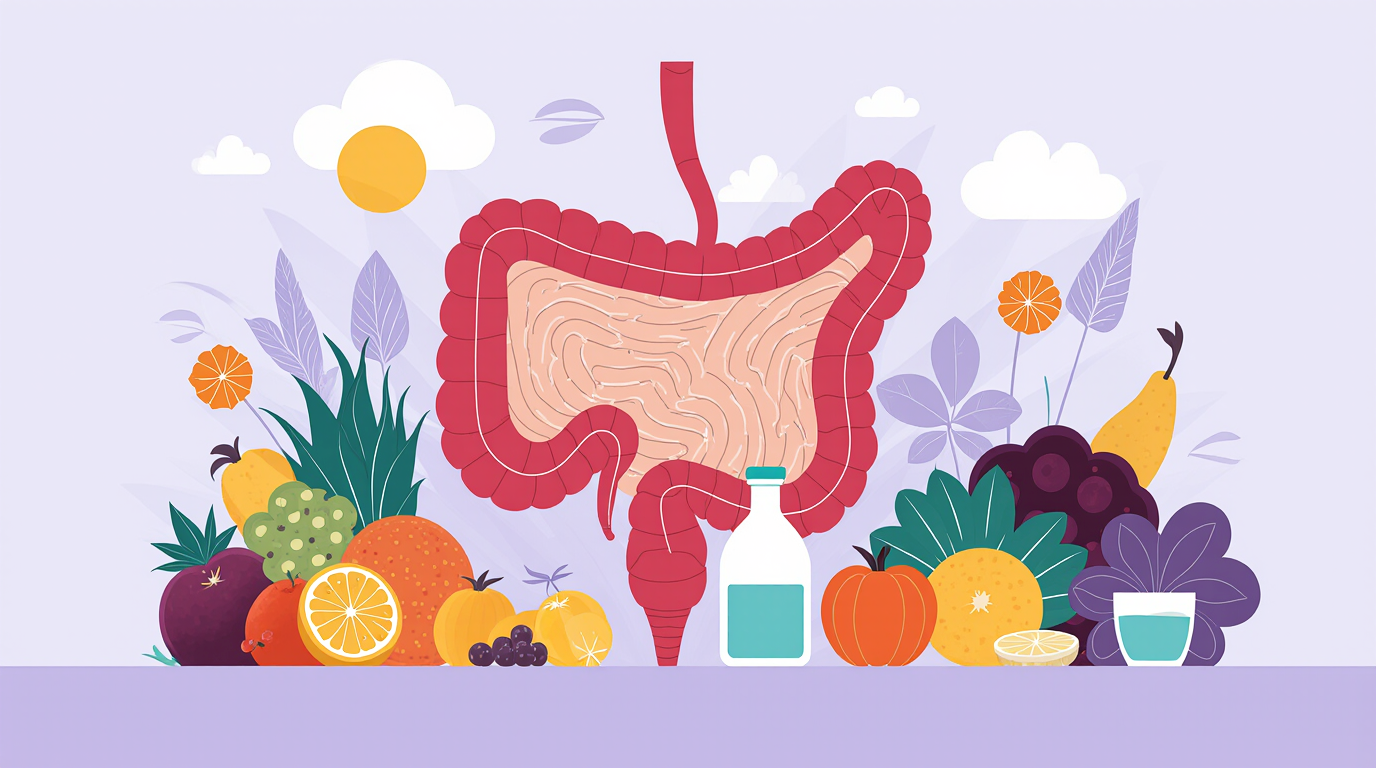
The microbiome is a highly complex ecosystem of billions of microorganisms. A balanced gut flora supports the body in:
-
Nutrient absorption
-
Digestion
-
Inflammation regulation
-
The production of important metabolic products
Prebiotics specifically increase the number of "good" bacteria — those that produce certain substances, perform protective functions, and displace potentially harmful germs ("colonization resistance").
2. They form short-chain fatty acids (SCFAs) – small molecules with a big impact
When gut bacteria ferment prebiotics, short-chain fatty acids such as:
-
Butyrate (butyric acid)
-
Propionate
-
Acetate
These molecules have impressive effects:
Butyrate
-
Main energy source for the cells of the intestinal mucosa
-
Supports regeneration of the intestinal epithelium
-
Strengthens the barrier function ("Leaky Gut" prevention)
-
Inhibits inflammatory processes
Propionate and Acetate
-
Support metabolism
-
Regulate appetite
-
Can have a positive influence on blood sugar control
SCFAs therefore work far beyond the gut — they are true multi-talents in the body.
3. Prebiotics support the immune system
About 70% of our immune system is located in the gut. A healthy microbiome trains immune cells, helps the body distinguish between "friend" and "foe," and regulates inflammatory responses.
Prebiotics promote precisely those bacteria that:
-
produce anti-inflammatory substances
-
modulate the immune system
-
displace pathogenic (harmful) microorganisms
This results in immune responses being balanced instead of excessively activated.
4. They can regulate digestion
Prebiotics increase stool volume and support healthy bowel movements. Many people therefore experience:
-
less constipation
-
more regulated digestion
-
less bloating in the long run (short-term bloating may occur as the flora adapts)
They act like a natural "gut trainer."
5. Prebiotics can influence mental well-being ("Gut-Brain Axis")
Research shows: The microbiome communicates with the brain via nerves, hormones, and metabolic products.
By promoting a healthy microbiome, prebiotics can:
-
reduce stress responses
-
improve sleep
-
support general well-being
Studies show that certain prebiotic fibers can even influence cortisol, the stress hormone.
6. Prebiotics support mineral balance
An exciting effect: Prebiotics can improve the absorption of minerals such as calcium, magnesium, and iron. This is because the formation of SCFAs lowers the pH value in the gut, which makes certain nutrients more soluble.
7. How many prebiotics do you need?
Most people consume significantly less fiber than recommended. The general recommendation for fiber is at least 25–30 g per day, a few grams of which can come from prebiotic fibers.
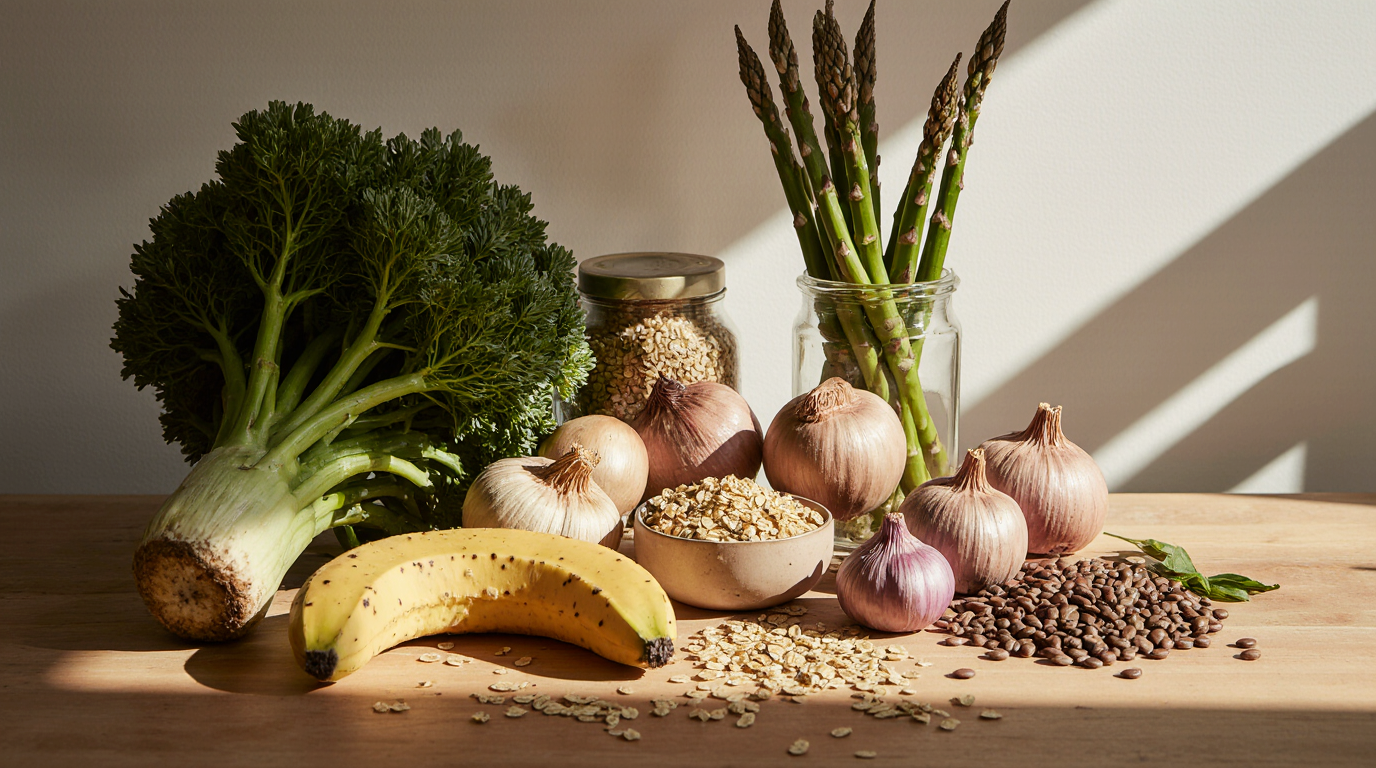
Good natural sources are:
-
Chicory
-
Jerusalem artichoke
-
Leek, onions, garlic
-
Asparagus
-
Legumes
-
Oats
-
Green vegetables
-
Bananas (the riper, the more resistant starch)
Although fermented drinks like kombucha do not contain prebiotics themselves, they support the environment in which prebiotics can optimally unfold their effect
8. Prebiotics and probiotics – a powerful duo
Probiotics bring beneficial bacteria into the gut, prebiotics help them grow there and "settle in." Together they form a synbiotic, i.e., a synergistic combination.
For foods or supplements that combine both, research shows particularly positive effects.
9. What is Kombucha – prebiotic or probiotic?
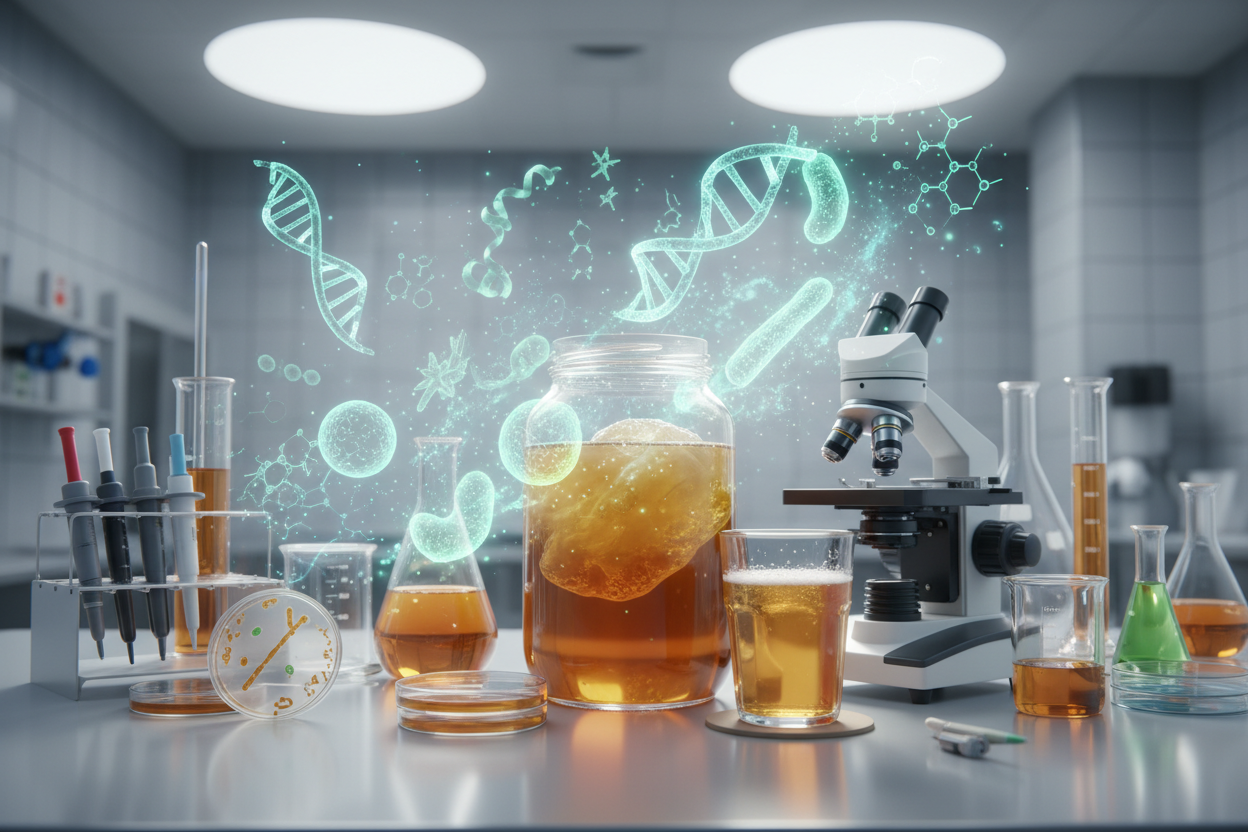
Kombucha is a fermented drink made from tea and sugar through the activity of bacteria and yeasts. It contains both living microorganisms and their metabolic products, which gives it a special position between prebiotic and probiotic:
-
Probiotic effect:
Kombucha sometimes contains living bacteria and yeasts (e.g., Lactobacillus-like strains) that can temporarily colonize the gut and support the gut flora. In this sense, Kombucha acts as a mild probiotic. -
Prebiotic effect:
At the same time, Kombucha also contains metabolic products of fermentation (such as organic acids, polyphenols, and sometimes fiber), which promote the growth and activity of existing gut bacteria as well as dead bacteria that serve as "food" for the good gut bacteria.
Kombucha is therefore neither exclusively probiotic nor prebiotic, but a combination of both: It provides living microorganisms and at the same time nutrients that support the microbiome. Therefore, it can be a valuable addition to promote gut flora and digestion.
Create your individual 30-day gut routine
Conclusion: Prebiotics are essential for a healthy microbiome
Prebiotics are far more than simple dietary fibers. They:
-
nourish good gut bacteria
-
support digestion and the immune system
-
promote the production of valuable metabolic substances
-
strengthen the gut barrier
-
have a positive effect on energy balance and well-being
A sufficiently high consumption of prebiotic dietary fibers is one of the simplest and most effective measures to support your gut in the long term.






Teilen: