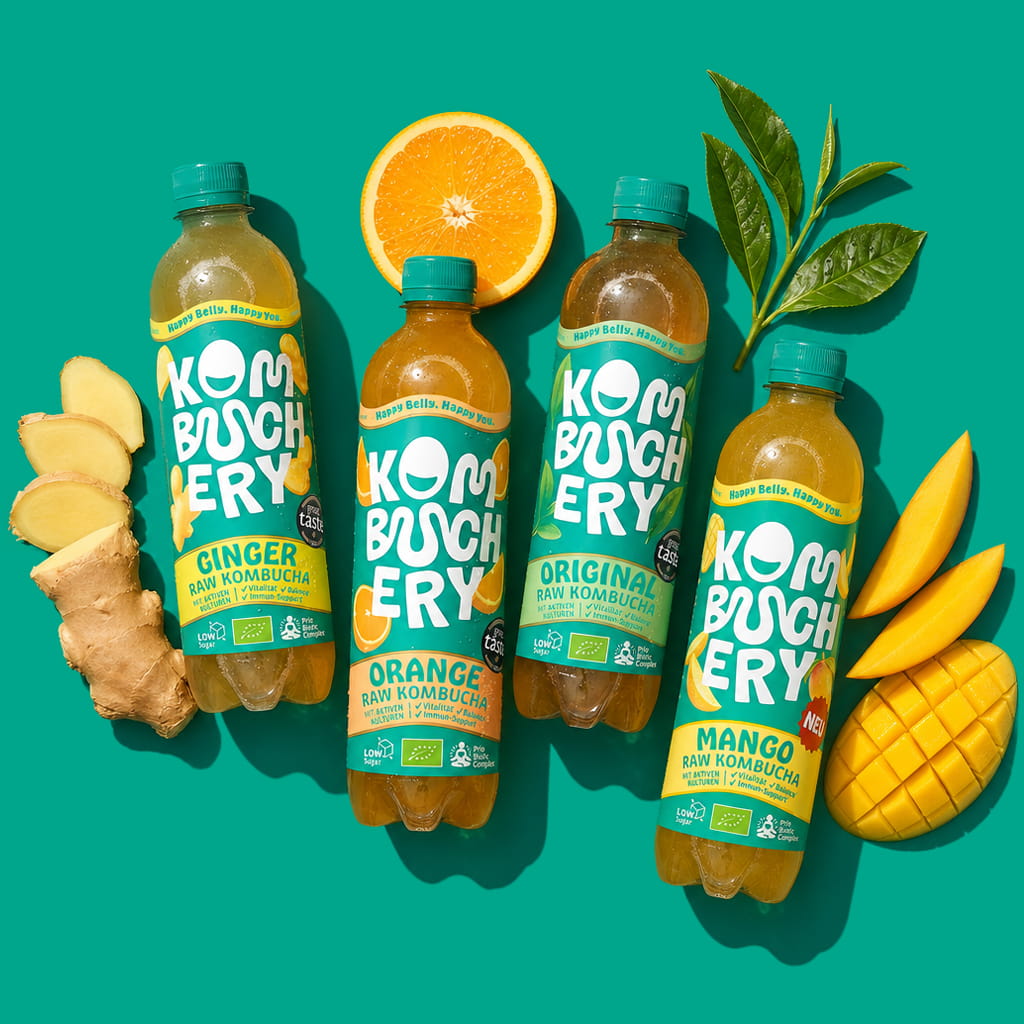

product image

select caret down
Login

Note: The content of this article is for general information purposes only. It does not replace medical or nutritional advice and does not constitute health-related statements about our products.

– Before you read on –

We don't just know everything about Kombucha ...

We also brew the best raw kombucha ourselves. If you're thirsty, stop by our shop and see for yourself!

Try kombuchery

We explain why acetic acid and co. can be good for the body

Various health-promoting substances are produced during the fermentation of kombucha. From B vitamins, vital yeasts, organic acids, and probiotic lactic acid bacteria to various enzymes.

The work of kombucha culture is truly remarkable and its diversity of metabolic products is hard to beat. The positive effect of kombucha is not only broken down to the individual components. Because the harmonious interaction of all components and their interactions make kombucha a special drink. Among these components are mainly some acids, which are scientifically proven to have a health-promoting effect on the human organism. I would like to introduce you to some important acids found in kombucha today. 

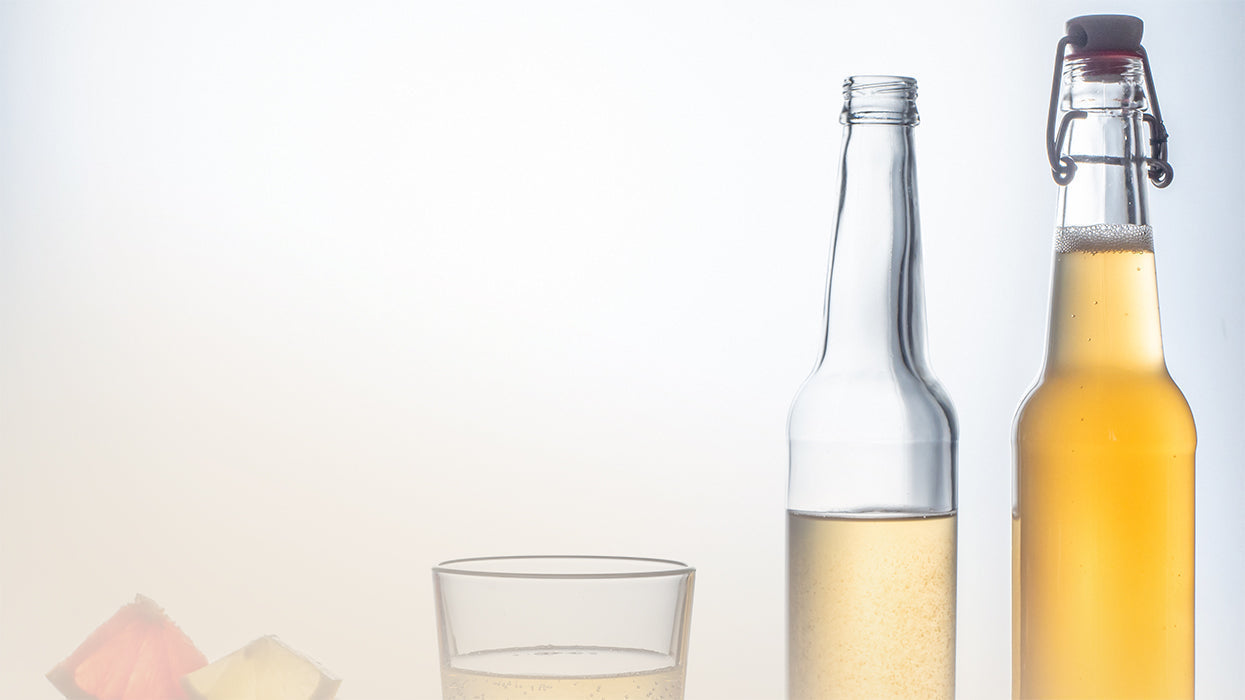
two bottles two glasses with kombucha wooden board flower decoration

Amino Acids

After water, proteins are the most common substances found in the human body. Proteins are made up of amino acids. They are essential for building muscles, skin, and hair. They are also a building block of the immune system and necessary for the creation of hormones and enzymes. They perform various transport functions in the blood and are even carriers of genetic information. 

Succinic Acid

In the human organism, succinic acid is naturally produced as a breakdown product of glucose metabolism and the urea cycle. It keeps the body's own acids in balance.

Acetic Acid

Acetic acid in kombucha not only stimulates human metabolism but also has a positive effect on many unhealthy bacteria and fungi. They do not like acid at all. In addition, it can help with detoxification.

Folic Acid

Folic acid is a vital B vitamin and plays an extremely important role in the body. It helps in the development and regeneration of various cells and is required by all body cells for the production and repair of DNA. The body cannot produce folic acid itself and depends on it being supplied regularly.

Close-up overhead view kombucha drink lemon slices herbs flowers

Glucuronic Acid

The glucuronic acid found in kombucha is formed during the oxidation of sugar. In our liver, glucuronic acid is naturally produced and is responsible for detoxifying. It has a very important detoxification function. In addition to glucuronic acid, gluconic acid is formed. Both are very similar in structure. Gluconic acid primarily promotes the glandular system and metabolism.  

All functions of glucuronic acid at a glance: 

  • supports the liver in binding and eliminating the body's own metabolic toxins
  • also binds foreign environmental toxins and eliminates them through urine and intestines
  • is a component of various polysaccharides, such as hyaluronic acid

Thanks to glucuronic acid, kombucha can help you detoxify and can be especially helpful with a small hangover. 

Warm light glasses with kombucha ginger roots wooden board lemon slices

Dextrorotatory Lactic Acid

Just like succinic acid and glucuronic acid, dextrorotatory lactic acid is also a natural component of the human organism, but only in the active dextrorotatory L-form. Levorotatory D-lactic acid, on the other hand, puts a strain on the human body. A lack of dextrorotatory lactic acid bacteria can, among other things, lead to a weakening of cell respiration.

In the tissue of cancer patients, dextrorotatory lactic acid bacteria are often completely absent. This lactic acid also positively influences the intestinal flora. The bacteria colonize the lower and middle small intestine and slightly acidify the environment in the intestine. This makes it harder for pathogens to spread.  

Usnic Acid

The usnic acid present in kombucha has an antimicrobial effect and can accelerate the healing of skin infections.

Leave a comment

Please note, comments need to be approved before they are published.

This site is protected by hCaptcha and the hCaptcha Privacy Policy and Terms of Service apply.

Note: This article is intended for informational purposes only and should not be construed as professional analysis, advice, or medical information. It contains the author's personal opinion based on researched literature and personal experience on the subject.

Recommended articles for you

You can find more of my articles, from A, like non-alcoholic kombucha cocktails, to Z, like lemon-ginger kombucha, on our Kombuchery blog. Let's learn more about kombucha together!

View all

Kombucha Guide Berlin: Die 10 besten Cafés & Restaurants in 5 Bezirken

Kombucha Guide Berlin: The 10 Best Cafes & Restaurants in 5 Districts

Urban Wellness in Berlin: 5 Neighborhoods Where You'll Find Great Kombucha Berlin is one of Europe's most exciting cities when it comes to modern food and drink culture. Kombucha is no longer a niche product here, but part of a...

Read moreabout Kombucha Guide Berlin: The 10 Best Cafes & Restaurants in 5 Districts

Wer kann mehr? Der Vergleich: Kombucha, Brottrunk & funktionale Limonaden

Who Can Do More? The Comparison: Kombucha, Brottrunk & Functional Lemonades

In recent years, the range of beverages available has changed significantly. In addition to classic soft drinks, more and more fermented beverages and so-called functional lemonades are available in supermarkets today. Particularly popular are kombucha, kvass, and modern lemonades with...

Read moreabout Who Can Do More? The Comparison: Kombucha, Brottrunk & Functional Lemonades

Kombucha und seine Wirkung: Wissenschaftliche Studien zu Inhaltsstoffen, Fermentation und Gesundheit

Kombucha and Its Effects: Scientific Studies on Ingredients, Fermentation, and Health

Kombucha is one of the most intensively researched fermented beverages in recent years. Modern microbiological, nutritional, and clinical studies show that the drink possesses an exceptionally complex biochemical composition. During fermentation, numerous bioactive compounds are formed, including organic acids, polyphenols,...

Read moreabout Kombucha and Its Effects: Scientific Studies on Ingredients, Fermentation, and Health

🌍 World Kombucha Day am 21. Februar: Geschichte, Fakten & Tipps zum Feiern

🌍 World Kombucha Day on February 21: History, Facts & Tips for Celebrating

Celebrate the Effervescent History of Kombucha Every year on February 21st, kombucha fans worldwide celebrate World Kombucha Day. But why exactly does this day exist? It's simple: it's a tribute to a beverage that has delighted, inspired, and refreshed people...

Read moreabout 🌍 World Kombucha Day on February 21: History, Facts & Tips for Celebrating

Die besten Nahrungsergänzungsmittel: Gesundheit gezielt stärken ohne Risiko

The Best Nutritional Supplements: Targeted Health Boosts Without Risk

Dietary Supplements: Beneficial for all who can't live perfectly healthy every day In a stressful everyday life, many people can't always manage to eat optimally healthy every day. Shift work, long days in the office, little time for fresh cooking,...

Read moreabout The Best Nutritional Supplements: Targeted Health Boosts Without Risk

Darmkuren im Check: Was wirklich wirkt

Bowel Cleanses Under Scrutiny: What Really Works

Colon cleanses, detox programs, and so-called "bowel purifications" have enjoyed great popularity for years. They promise a fresh start for the body, more energy, better digestion, and increased well-being. Especially in the context of gut health, such promises seem plausible...

Read moreabout Bowel Cleanses Under Scrutiny: What Really Works

Präbiotische/ probiotische Hautpflege: Hilft sie wirklich?

Prebiotic/probiotic skincare: Does it really work?

Prebiotic and Probiotic Skincare: Trend or Scientifically Effective? The Skin Microbiome: A Complex Ecosystem The skin is the largest human organ and a complex ecosystem inhabited by a multitude of microorganisms, collectively known as the skin microbiome. This consists of...

Read moreabout Prebiotic/probiotic skincare: Does it really work?

Wozu braucht der Körper Präbiotika?

Why does the body need prebiotics?

Prebiotics are often overshadowed by their more well-known "relatives," probiotics. While probiotics are living microorganisms that we ingest through food or supplements, prebiotics serve as food for the beneficial bacteria in the gut. They are, so to speak, the fuel...

Read moreabout Why does the body need prebiotics?

Wie viel Kombucha ist gut für dich?

How much kombucha is good for you?

How much kombucha is good for me? Our tips on dosage, duration of use and what your body really needs Kombucha is more than just a trendy drink - it's alive, naturally fermented, and packed with microorganisms. But how much...

Read moreabout How much kombucha is good for you?

Neue Rezeptur mit Vitamin C aus Acerola: *Vitamin C trägt zu einer normalen Funktion des Immunsystems, einem normalen Energiestoffwechsel sowie zum Schutz der Zellen vor oxidativem Stress bei.
  • Vitamin C trägt zu einer normalen Funktion des Immunsystems bei.
  • Vitamin C trägt zu einer normalen psychischen Funktion bei.
  • Vitamin C trägt zu einem normalen Energiestoffwechsel bei.
  • Vitamin C trägt zur Verringerung von Müdigkeit und Ermüdung bei.
  • Vitamin C trägt zu einer normalen Funktion des Nervensystems bei.
  • Vitamin C trägt dazu bei, die Zellen vor oxidativem Stress zu schützen.
  • Vitamin C trägt dazu bei, die reduzierte Form von Vitamin E zu regenerieren.
  • Vitamin C trägt zu einer normalen Kollagenbildung für eine normale Funktion der Haut bei.
  • Vitamin C trägt zu einer normalen Kollagenbildung für eine normale Funktion der Blutgefäße bei.
  • Vitamin C trägt zu einer normalen Kollagenbildung für eine normale Funktion der Knochen, der Knorpel, der Zähne und des Zahnfleisches bei.
  • Vitamin C erhöht die Eisenaufnahme.